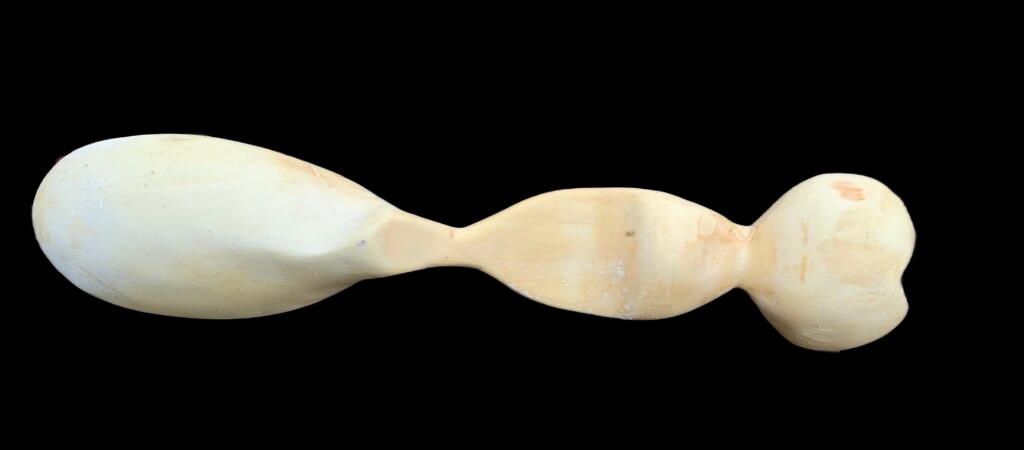
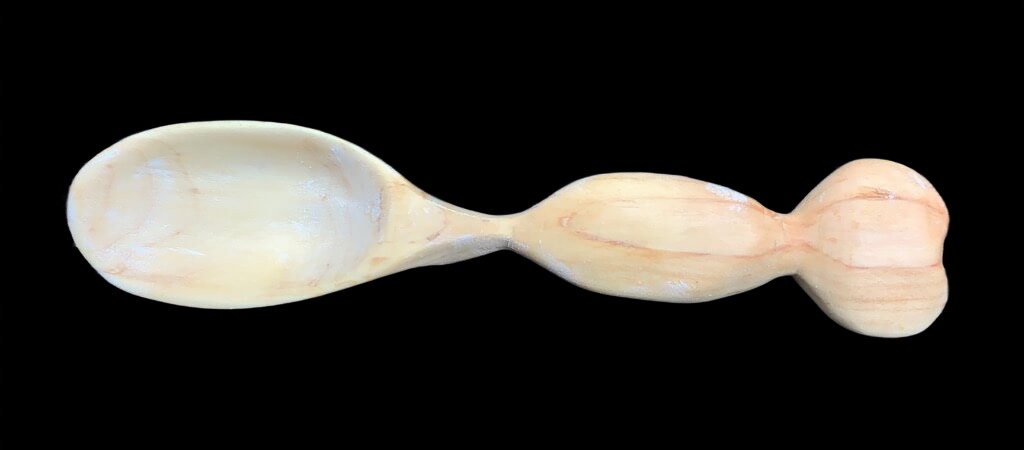
Jack Daw
This small spoon has a heart at the end that sits nicely, becomes fuller than thinner again where the fingers hold it.
Jack is an old word for thief. And the Daws or Corvids have been renowned for nicking trinkets and such like for thousands of years. People who collect things, such as this Love Spoon, also seem to be obsessively acquisitive.
But such human magpies cannot help themselves and will collect weird, wonderful and even boring things. From art collections hoarded in their basements to Aeroplane Sickness Bags. Wanna be a weirdo? Check out the Reddit Cool Collections forum.
The Three Daws, an ancient pub in Gravesend, was a home to smugglers or tax thieves. Its name probably originates from the same background that meant "thieving magpies", the same Corvid family that includes Jack Daws. Linnaeus gave Jack Daw the name Corvus monedula. Mondedula comes from the Italian for money, as they were renowned for stealing shiny objects such as coins. Italian for magpie is "Gazza", a famous opportunist goal poacher in English football.
Spoons have developed from chopsticks. And that’s about it. There’s not a huge history of the development of spoons yet some people will collect anything - and you’ve guessed it - they collect spoons! I have yet to find an interesting web site about them - apart from mine but the Americans have a museum of cutlery. Based on the ‘cut’ in cutlery they claim that cutlery means a tool with an edge to it. Thank god I saw no mention of spoons there.
I did however visit a Museum of Cutlery in Thiers, France. We had also found a Beret Museum and a Macaron Museum. Trust them!
Cutlery in french is ‘coutellerie’. At least 80% of english words, it is pretty much the same in both languages. Prime Minister Georges Clemenceau (1841-1929) said that “English is just badly pronounced French.” Their word for a pocket knife is ‘canif’. Now say our word ‘knife’ but pronounce the ‘k’.
Speaking of french ‘entrepreneur’ means ‘to take between’ which I think is a pretty close ally to "niche marketing". So back to our mindless collectors - entrepreneurs have been quick to supply these people with endless spoons to buy. Souvenir ones. We used to have a Goat & Dairy supplies business called “Harvester” and we sold thousands of little silver plated spoons with the goat of the Welsh Fusiliers on them.
There are many spoons that no one understands what they’re for. But the Romans just had two types. One the ‘ligula’ for soup or porridge and one, the ‘cochleare’ for shellfish. Which proves that civilisation peaked two thousand years ago.
They say that the reason or excuse for collecting is that it gives a sense of happiness. The hobby also makes you avoid feeling bored when you do some work. There is a list of 61 types on my website split into five categories. Every day and Dining Spoons, Kitchen & Cooking Spoons, Serving & Specialty Flatware, Non-Standard, Collectible, Antique & Religious Spoons, Niche & Novelty Spoons. Then, of course, there are my spoons - none of which appear in that list! All unique but they still all look like spoons to me.
Everyday & Dining Spoons
Teaspoon: The standard small spoon for stirring hot beverages.
Tablespoon: A larger spoon used for serving or eating.
Dessert Spoon: Specifically designed for eating desserts, sized between a teaspoon and a tablespoon.
Dinner Spoon / Table Spoon: The primary spoon used for eating main courses.
Soup Spoon: Has a large, deep, oval or round bowl for cupping liquids.
Bouillon Spoon: A smaller, round soup spoon.
Asian Soup Spoon: A deep, wide, flat-bottomed spoon made of ceramic or melamine.
Demitasse Spoon: Tiny spoon for espresso or Turkish coffee cups.
Coffee Spoon: Slightly smaller than a standard teaspoon, designed for coffee cups.
Iced Tea Spoon / Tall Drink Spoon: Has a very long handle for stirring tall glasses of iced tea.
Cocktail Spoon / Bar Spoon: A long-handled spoon used to mix and layer drinks.
Grapefruit Spoon: Features a tapered bowl with serrated edges to cut fruit from the rind.
Egg Spoon: A small porcelain, wood, or plastic spoon used for eating soft-boiled eggs (as metal can react with the yolk).
Caviar Spoon: Mother-of-pearl or horn spoons; used to avoid imparting metallic flavors to caviar.
Fruit Spoon: A specially shaped spoon for scooping out soft fruits like kiwis or melons.
Sundae Spoon: A long-handled spoon with a flat bowl, perfect for reaching the bottom of ice cream sundaes.
Splayd: A hybrid utensil combining the bowl of a spoon, the tines of a fork, and the edge of a knife.
Kitchen & Cooking Spoons
Wooden Spoon: A classic kitchen staple for mixing, stirring, and scraping.
Slotted Spoon: A spoon with holes or slots used to lift solids out of liquids.
Solid Spoon: A standard serving spoon with no holes, used for transferring food.
Basting Spoon: Features a shallow bowl to scoop and pour hot liquids or fats over meat while roasting.
Ladle: The largest and deepest spoon, used for scooping and serving soups or stews.
Skimmer Spoon: A shallow, wide spoon with wire mesh or holes to skim fat, foam, or particles from the top of stocks.
Measuring Spoons: Standardized spoons for precise baking and cooking volumes.
Coffee Scoop: A measuring spoon specifically sized for a single cup of coffee grounds.
Rice Spoon / Paddle: Flat, paddle-shaped spoons used to scoop cooked rice without crushing the grains.
Tadka Spoon / Spice Spoon: Small, deep metal spoons used in Indian cooking to heat whole spices in hot oil.
Salt Spoon: A tiny spoon for serving and sprinkling loose salt at the dining table.
Spaghetti Spoon / Server: A spoon with deep prongs/teeth in the bowl to easily grab and twirl pasta.
Melon Baller: A small, semi-spherical spoon used to scoop perfect balls out of melons or other fruits.
Cookie Scoop: A spring-loaded, hemisphere-shaped spoon used to portion out cookie dough onto a baking sheet.
Serving Spoon: A broad, deep spoon used to move food from a serving dish to a plate.
Wok Spoon: A wide, metal, or wooden spoon designed specifically to stir ingredients inside a round wok.
Spoonula: A spatula with a slightly curved, bowl-like edge, letting you scrape bowls and scoop simultaneously.
Spork: A hybrid fork-spoon with shallow tines, often used for camping or fast food.
Serving & Specialty Flatware
Sugar Spoon: A small spoon with a bowl often molded into a seashell shape, used for serving granulated sugar.
Sugar Sifter Spoon: A decorative serving spoon with a perforated or slotted bowl to dust powdered sugar over desserts.
Honey Spoon: Designed with grooves in the bowl so honey clings to it without dripping.
Absinthe Spoon: A perforated decorative spoon placed over a glass to hold a sugar cube as water is poured over it.
Olive Spoon: A slotted spoon used to lift olives out of brine while allowing the liquid to drain.
Cream Soup Spoon: Similar to a bouillon spoon, but with a round, slightly larger bowl meant for creamy soups.
Gumbo Spoon: A large, round spoon typically used for eating thick Cajun gumbos and stews.
Ramen Spoon: A broad Asian-style soup spoon designed to hold noodles, broth, and toppings simultaneously.
Bone Spoon: Historically crafted from bone, currently used as a novelty or eco-friendly alternative for spreads and condiments.
Butter Spoon: Features small ridges or slots to scrape hard butter into curls or to serve it at the table.
Jam Spoon / Marmalade Spoon: Slightly angled and flat-bottomed to reach the bottom and corners of jam jars.
Collectible, Antique & Religious Spoons
Apostle Spoons: Highly collectible antique silver spoons with the finial of the handle shaped to resemble an apostle.
Souvenir Spoon: A decorative spoon featuring an emblem or engraving, bought as a commemorative keepsake of a location.
Mote Spoon: An antique tea strainer spoon featuring a pierced bowl to remove tea leaves, and a pointed handle to clean the teapot spout.
Anointing Spoon: An ancient spoon used in religious coronations, such as the UK monarch's coronation, to pour holy oil.
Caddy Spoon: An antique spoon explicitly made for scooping dry tea leaves out of a tea caddy.
Christening Spoon: An ornamental, often personalized spoon given as a traditional baby gift to wish for a lifetime of luck and wealth.
Snuff Spoon: Historically used to take and inhale snuff (finely ground tobacco).
Non-Standard, Niche, & Novelty Spoons
Tasting Spoon: A small spoon used by chefs to test the flavor of a dish without returning the utensil to the pot.
Decorating Spoon: Features a small, pointed spout used for drizzling and drawing with sauces and syrups on plates.
Straw Spoon: A curved, spoon-ended straw.
Baby Spoon: A small, shallow, and blunt spoon designed for infants learning to self-feed.
Toddler Spoon: A thicker, ergonomically shaped spoon for young children.
Chili Spoon: A long, large spoon designed specifically to handle the chunky, thick consistency of chili.
Chemistry Spoon / Spatula: A lab tool typically made of stainless steel or plastic, used for scooping and transferring solid chemicals.
Decorative Wall Spoon: Large, ornate wooden or metal spoons designed exclusively as wall-hanging kitchen art.
155mm